
 Image 1 of 11
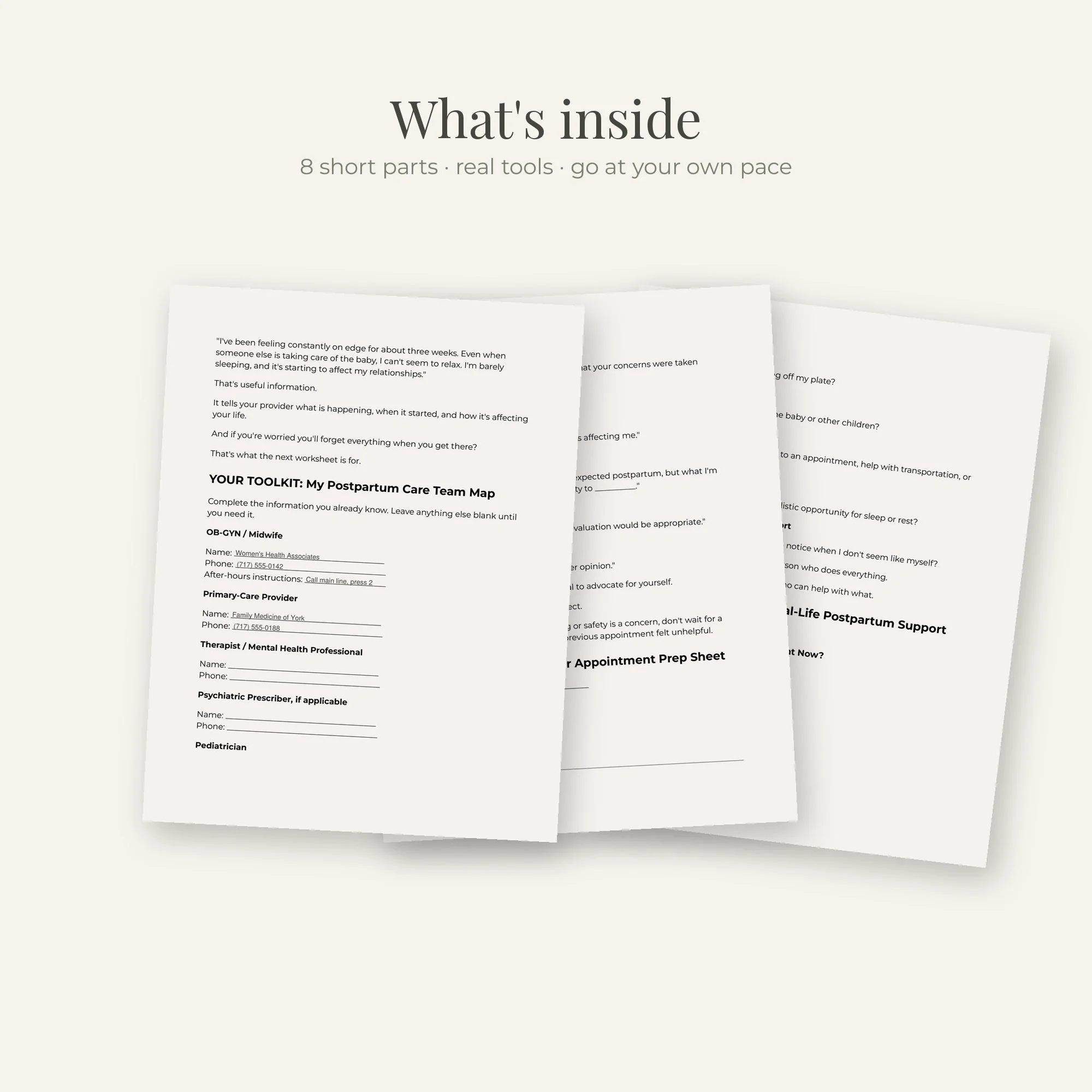 Image 2 of 11
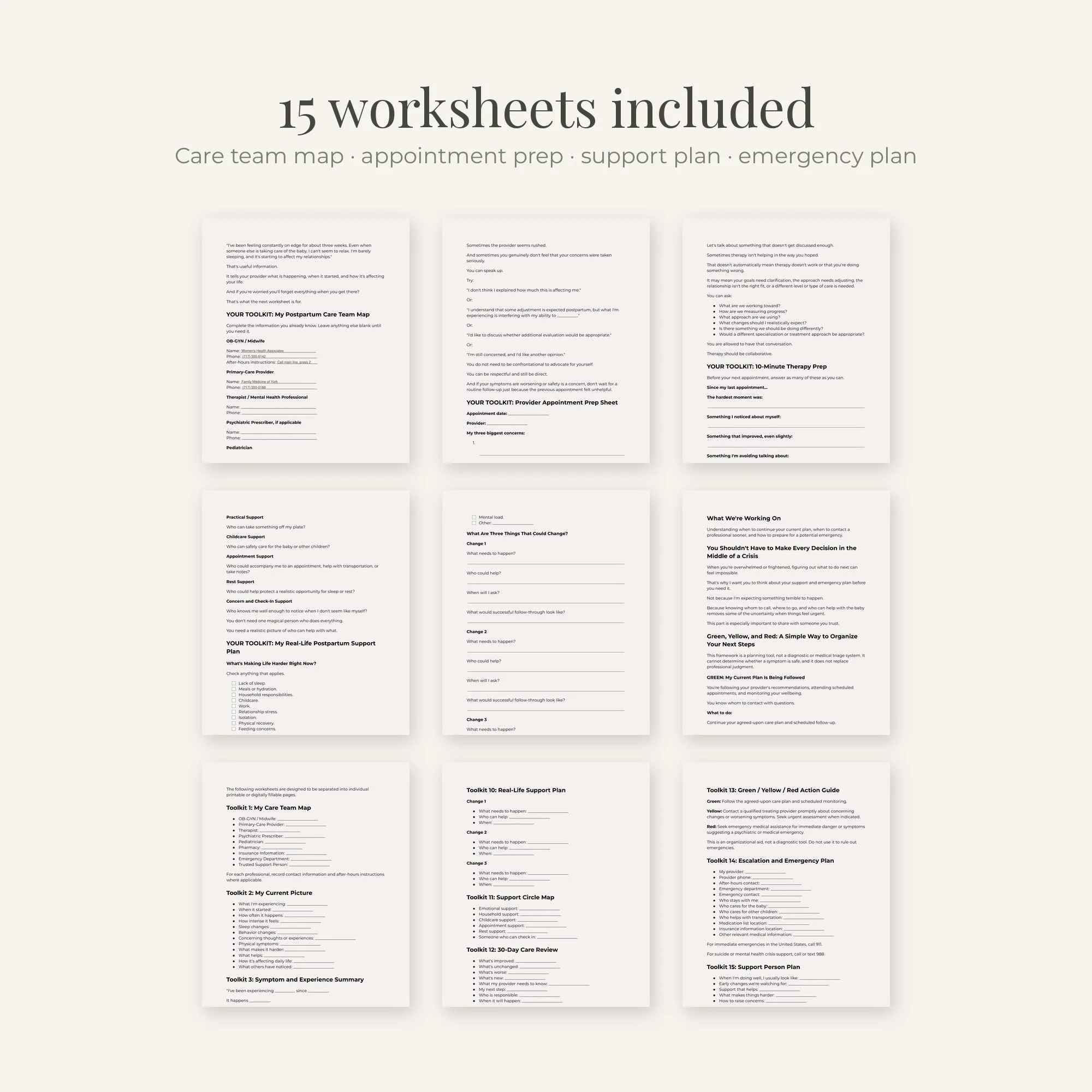 Image 3 of 11
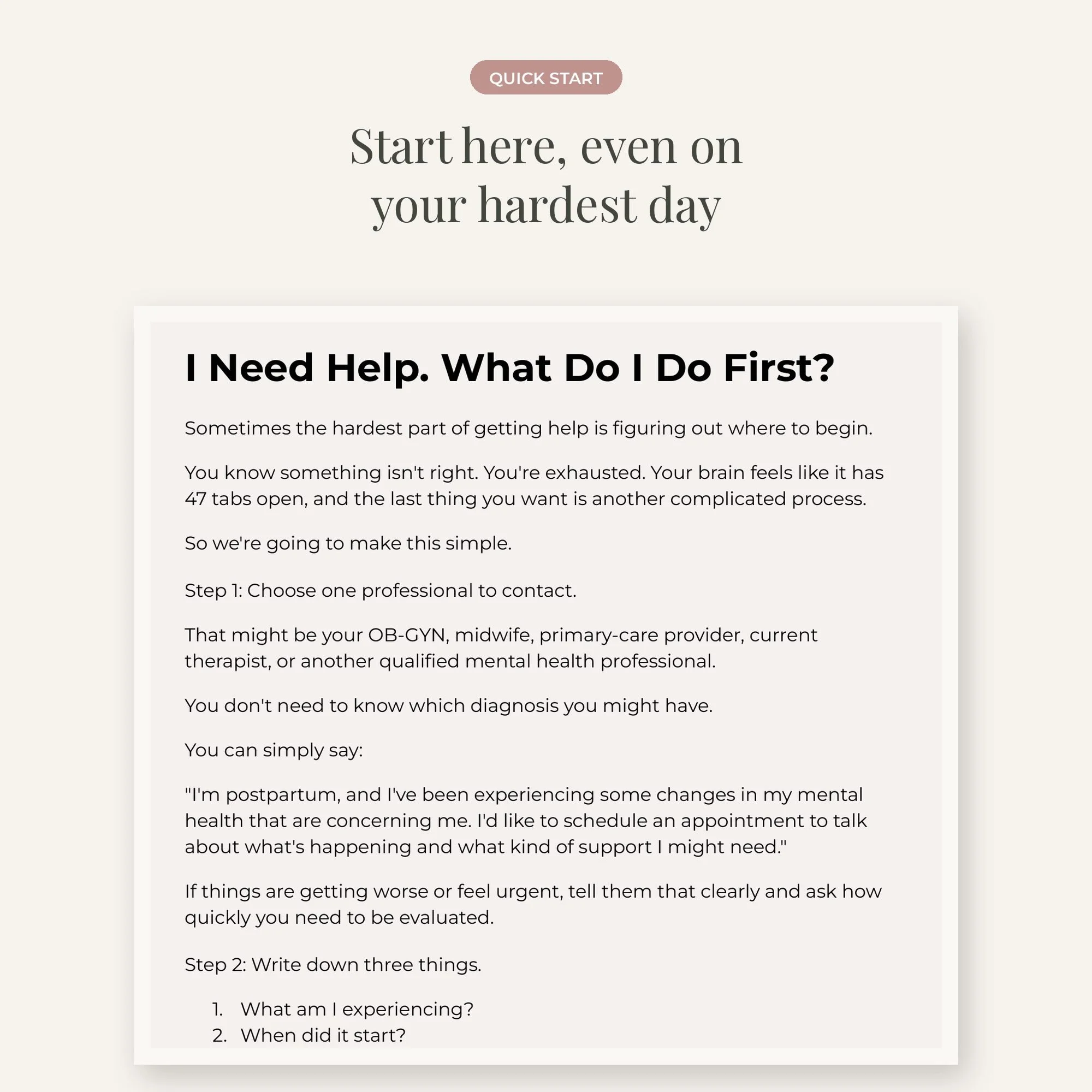 Image 4 of 11
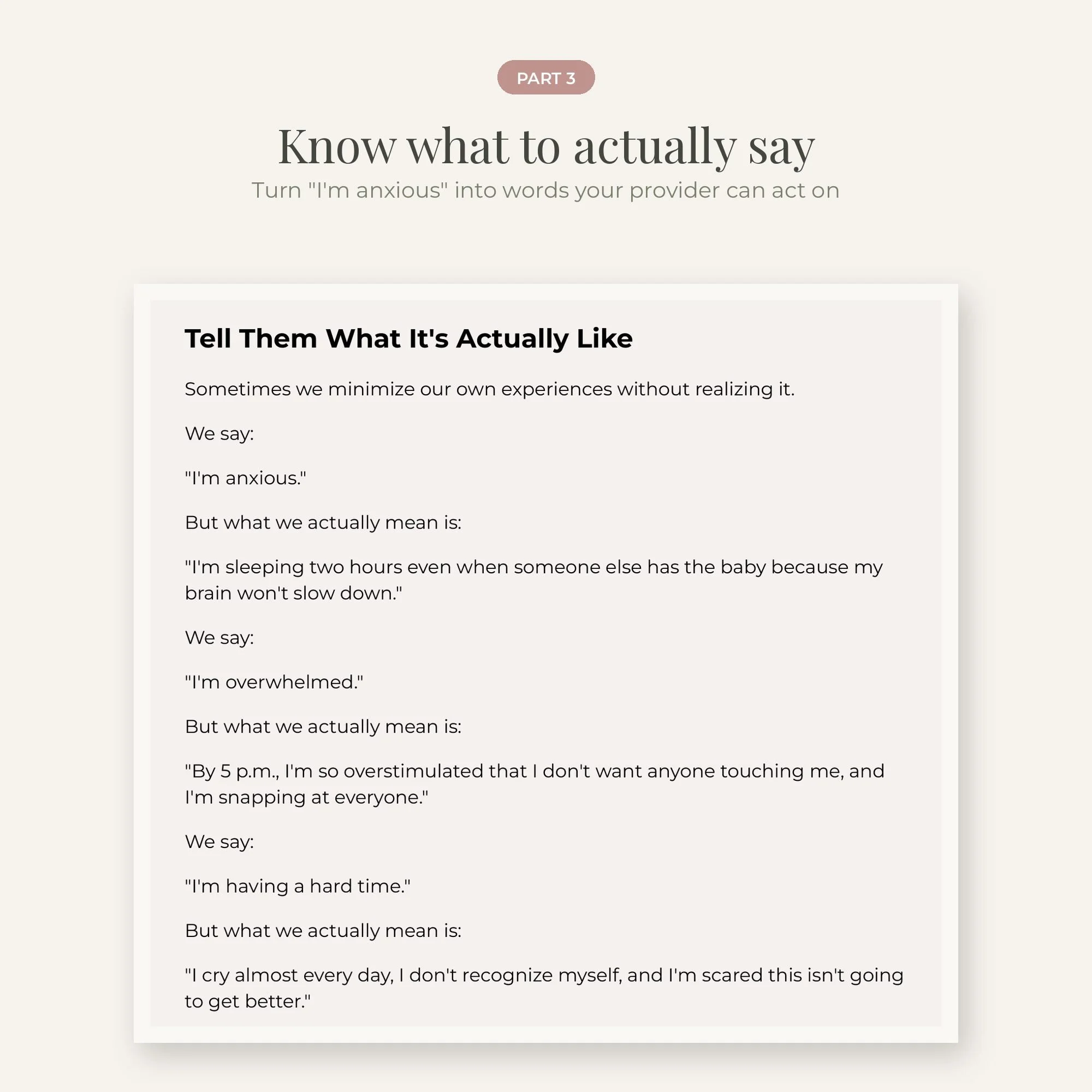 Image 5 of 11
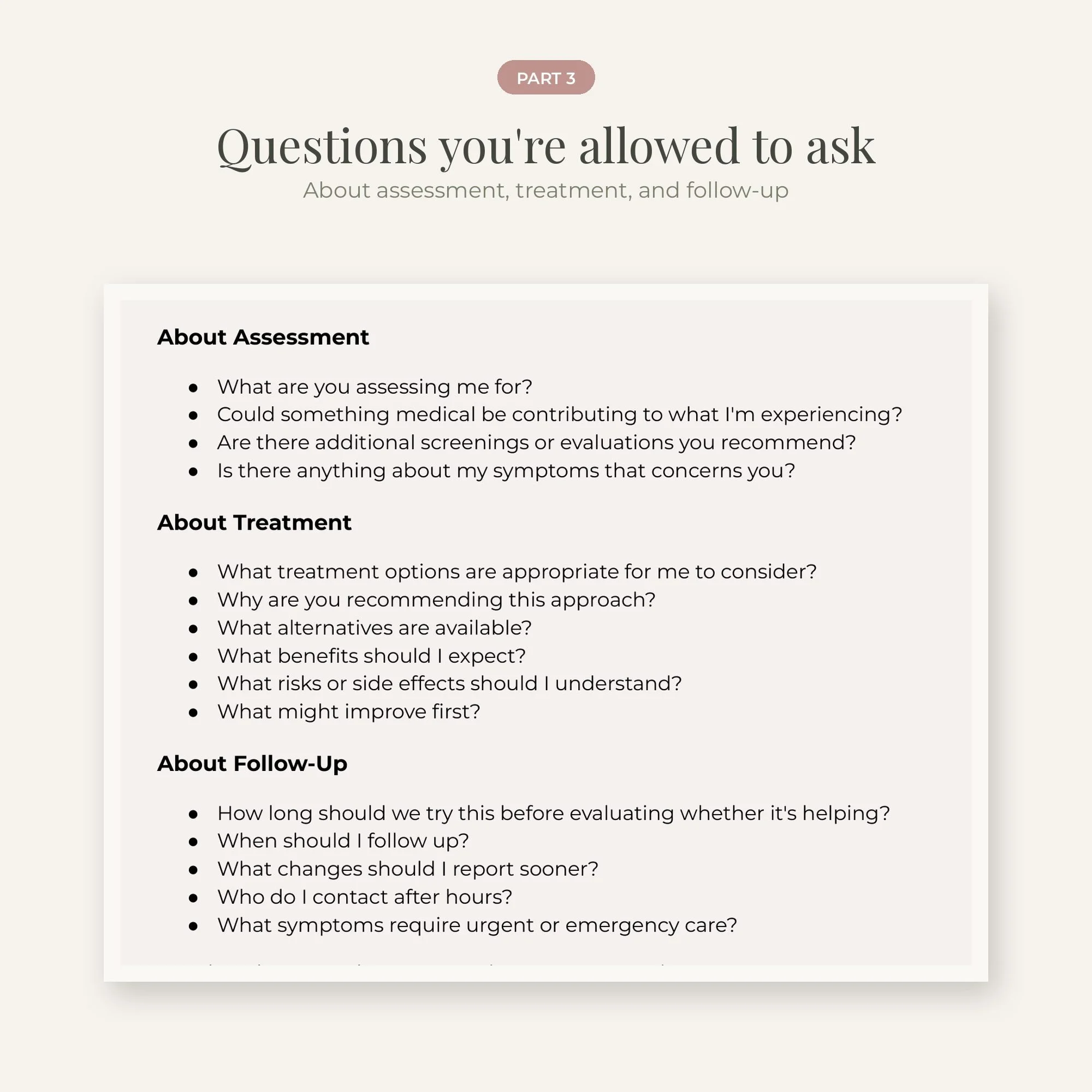 Image 6 of 11
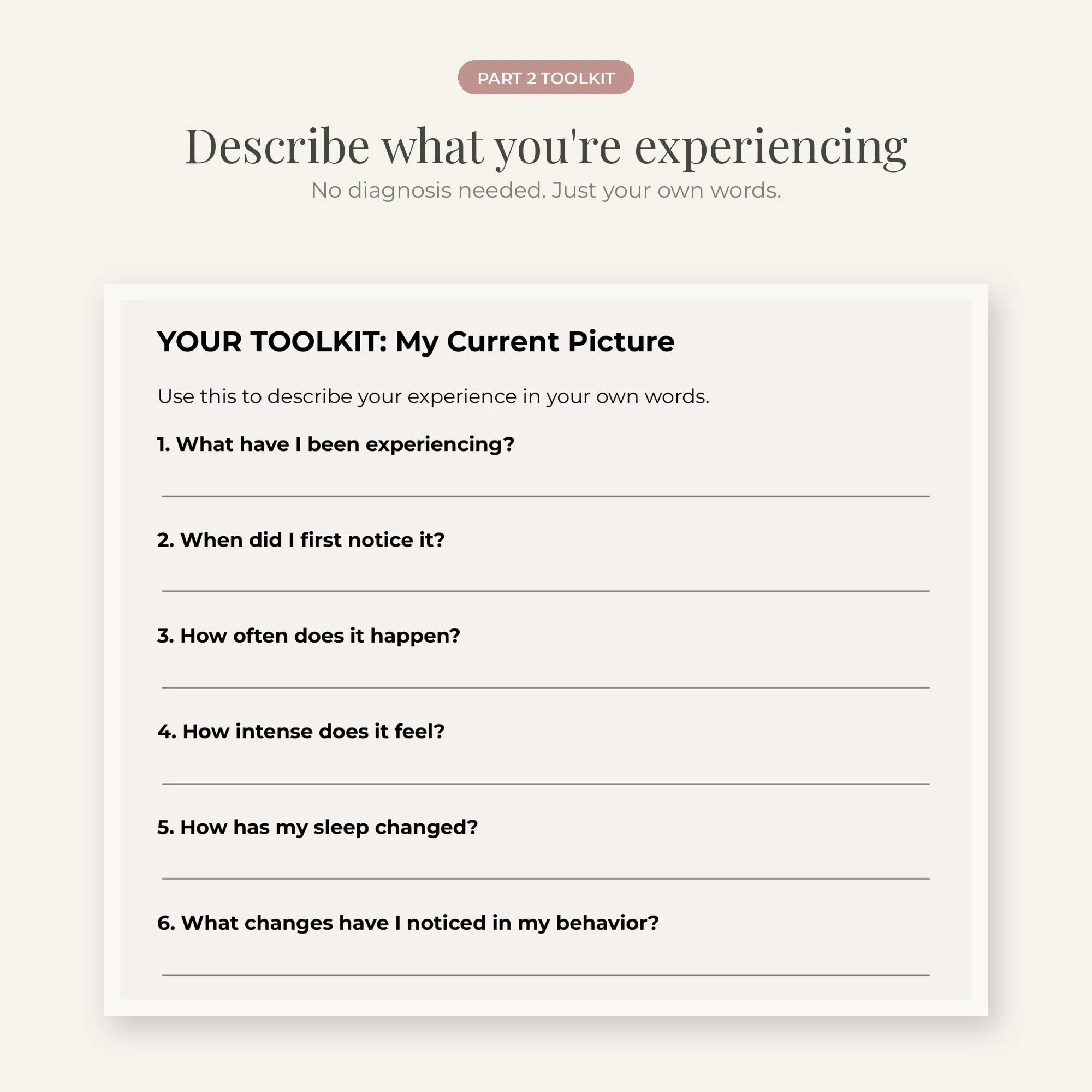 Image 7 of 11
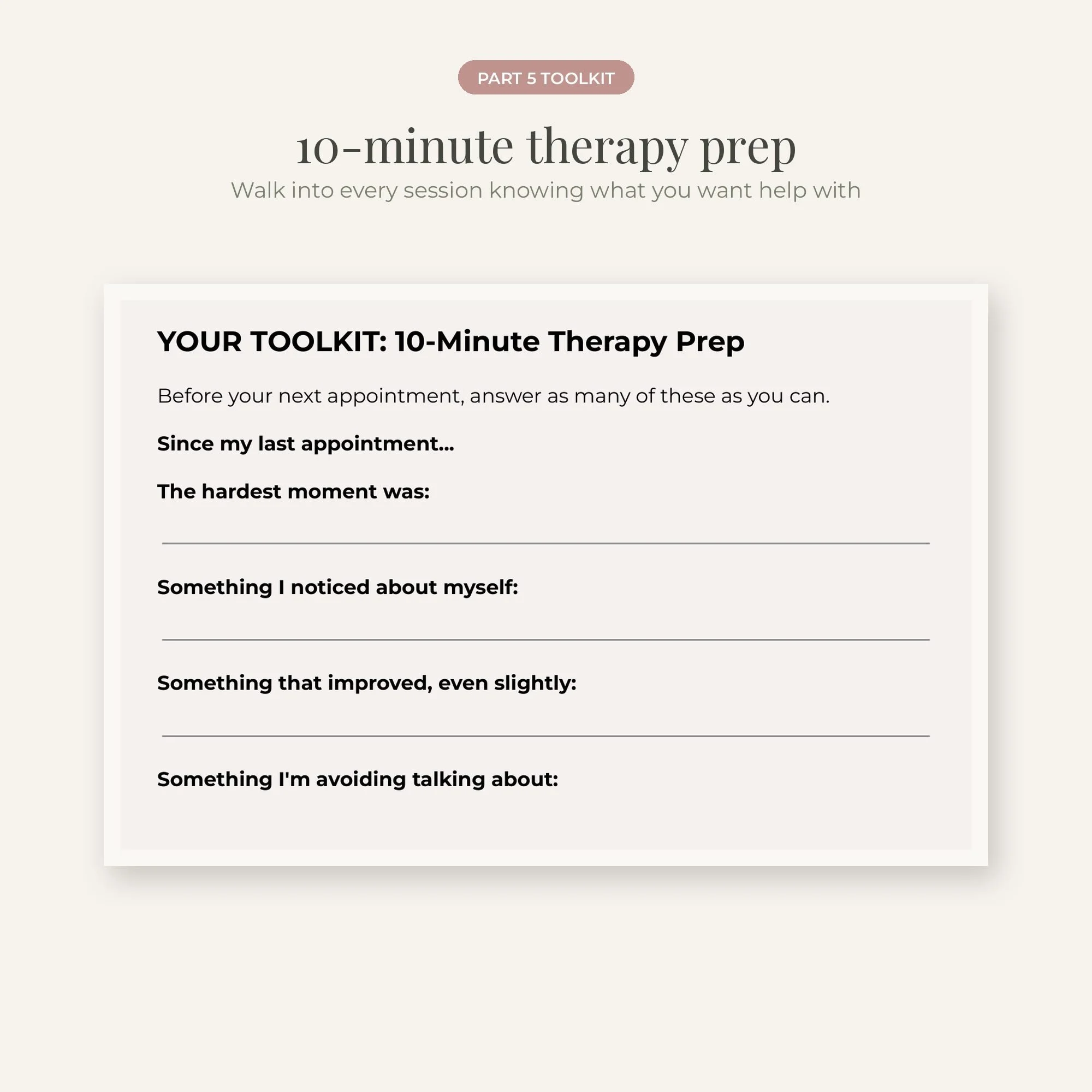 Image 8 of 11
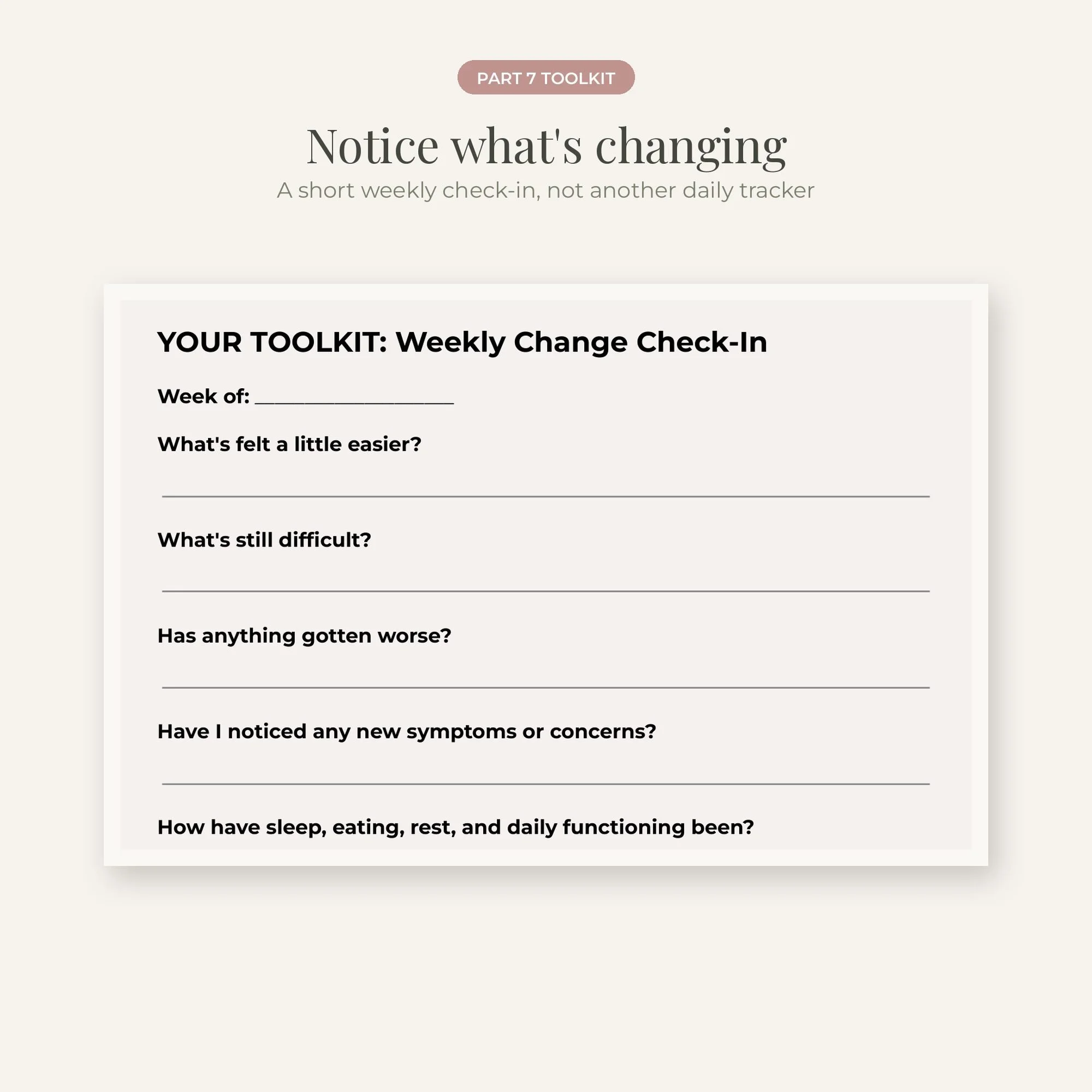 Image 9 of 11
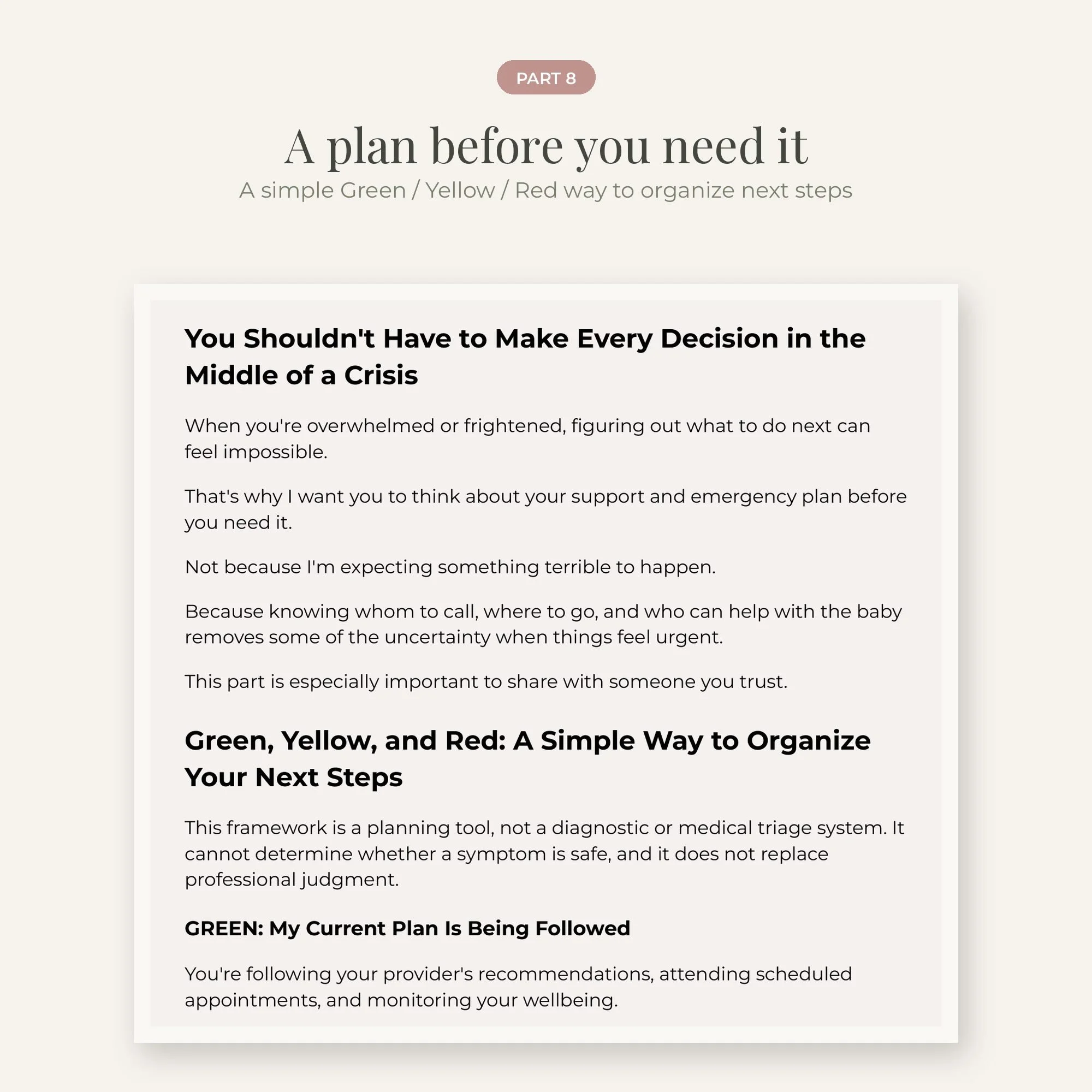 Image 10 of 11
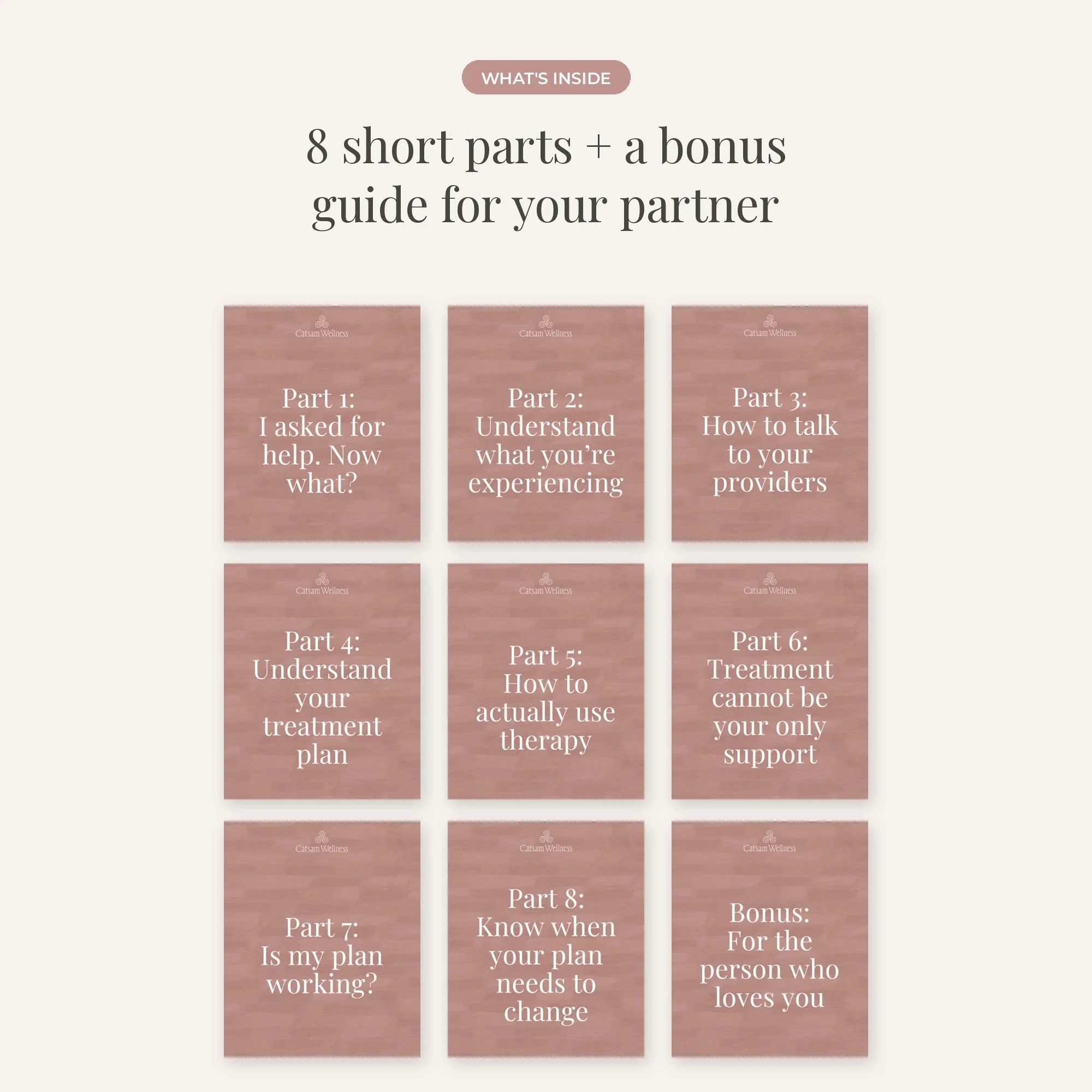 Image 11 of 11
You don't have to figure out postpartum mental health care alone.
A step-by-step workbook to help you understand your options, talk to your providers, and build a support plan that works in your real life, not just on paper.
Does this sound familiar?
Maybe you've Googled what you're feeling at 2 a.m. more times than you'd like to admit.
Maybe you finally told your doctor something didn't feel right, and you walked out with more questions than answers.
Maybe you're still getting everything done (feeding the baby, answering texts, making dinner) without letting on how much you're actually struggling.
Maybe you've started therapy or medication and you're not sure whether it's helping.
Or maybe you're having thoughts you're afraid to say out loud, because you're scared of what might happen if you do.
And while everyone around you is asking how the baby is sleeping, eating, and growing, you're quietly wondering when someone is going to ask how you're doing.
If any of that sounds familiar, it makes sense that you feel unsure. Getting postpartum mental health support isn't always straightforward. Nobody hands you a map.
This workbook is that map 🤍
What this is
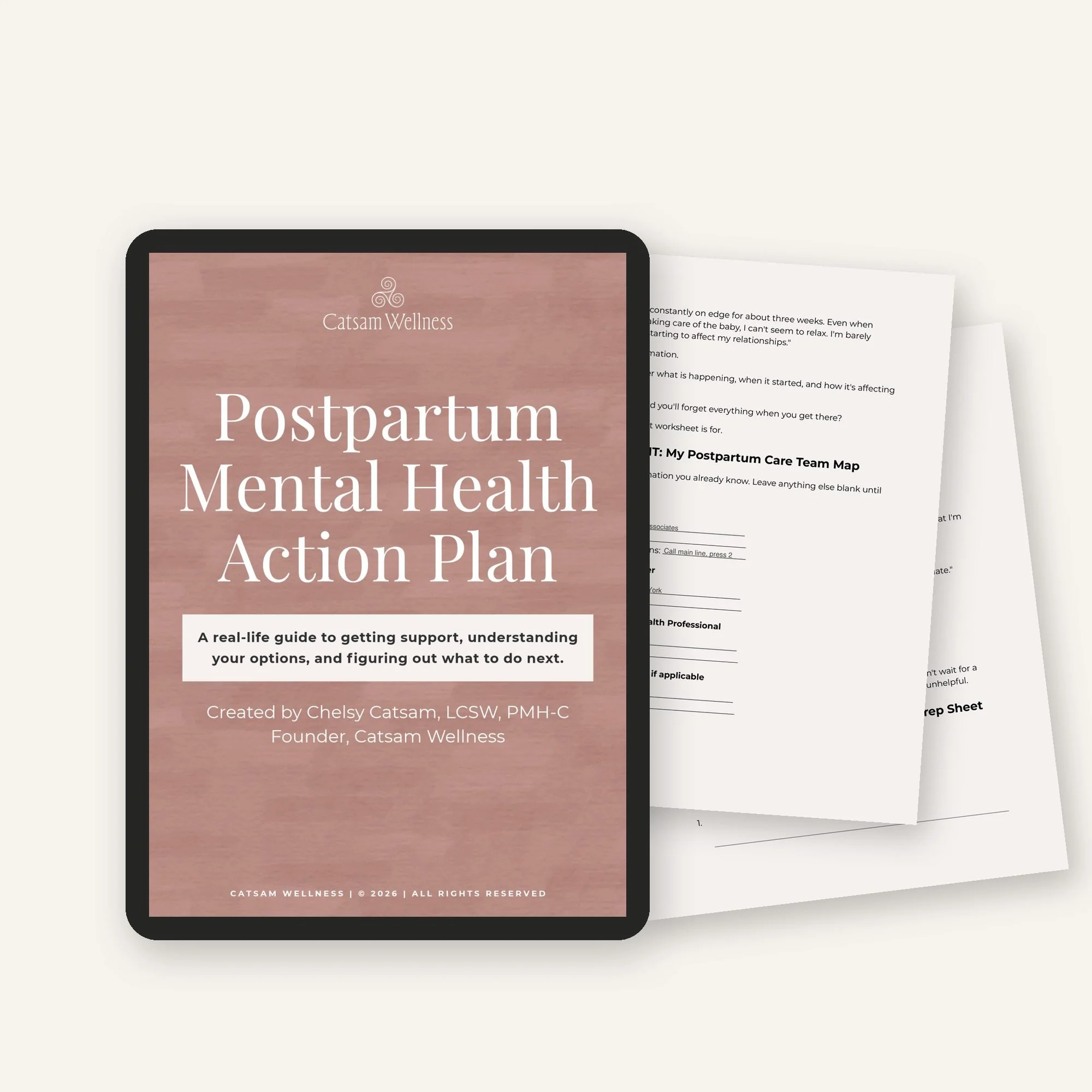
The Postpartum Mental Health Action Plan is a self-guided workbook that takes the guesswork out of getting support after baby.
It answers the questions most moms are left to figure out on their own:
Who do I call, and what do I actually say?
What happens after I tell someone I'm struggling?
What questions am I allowed to ask?
How do I know if my treatment is working?
How do I get real help at home, not just "let me know if you need anything"?
What do we do if things get worse?
It won't diagnose you, and it doesn't replace professional care. What it does is help you show up to that care prepared, speak up for yourself, and build a plan you can share with the people around you.
You don't need the perfect words. You don't need a diagnosis. And you don't need to wait until you're falling apart.
What's inside
Eight short parts, each with a clear explanation, real-life examples, one manageable next step, and a tool to fill in. By the end, you'll have your own action plan to bring to appointments, share with your support people, and come back to as your needs change.
Start Here: "I Need Help. What Do I Do First?"
A four-step quick start for when you're struggling and don't know where to begin. You don't have to finish the workbook before reaching out to a professional.
Part 1: I Asked for Help. Now What?
Who might be on your care team, what screening, assessment, and follow-up actually mean, and why you don't need to show up with your own diagnosis. You'll leave with: your Postpartum Care Team Map
Part 2: Understanding What You're Experiencing
Postpartum mental health is so much more than the baby blues. Learn what you might be covering up with "but I'm functioning," and how to talk about the thoughts you're afraid to say out loud. You'll leave with: a one-page summary you can hand to your provider
Part 3: How to Talk to Your Providers
How to prepare so you don't have to remember everything in the exam room, how to describe what it's actually like, the questions you're allowed to ask, and what to say when you don't feel heard. You'll leave with: your Appointment Prep Sheet and question list
Part 4: Making Sense of Your Care
An approachable overview of therapy, medication, support groups, and other kinds of care, so treatment isn't something that just happens to you. You'll leave with: your Treatment Plan At-a-Glance
Part 5: How to Actually Use Therapy
What you're "allowed" to bring to a session, why the part you're editing out might matter most, and what to do if therapy doesn't seem to be helping. You'll leave with: a reusable 10-Minute Therapy Prep sheet
Part 6: Treatment Can't Be Your Only Support
You can't therapy-session your way out of having no sleep, no meals, and no breaks. Turn "I need more help" into specific asks, and build a support circle that actually shows up. You'll leave with: your Real-Life Postpartum Support Plan
Part 7: Is My Plan Working?
What "better" really looks like (hint: it's not "happy all the time"), how to track change without obsessing, and how to close the loops on referrals and follow-ups. You'll leave with: a Weekly Check-In and a 30-Day Care Review
Part 8: Know When the Plan Needs to Change
A simple Green / Yellow / Red way to organize your next steps, and an emergency plan you build together before you ever need it. You'll leave with: your Escalation and Emergency Plan
Bonus: a guide for the person who loves her
Supporting Her: A Postpartum Mental Health Guide for Partners and Loved Ones
The people who love you often want to help but don't know how, and "just tell me what you need" ends up adding something to your to-do list.
This bonus guide helps your partner or support person:
Notice when you're struggling, even when you're doing a really good job at hiding it
Bring up concerns with compassion instead of panic
Take things off your plate without making you manage your own help
Know when it's time to call a provider or get immediate help
It ends with a Support Person Plan you complete together, so you're both on the same page about what to watch for and what to do.
Your toolkit
Every worksheet is included and ready to print, fill in digitally, or copy into a notebook:
My Care Team Map
My Current Picture
Symptom & Experience Summary
Provider Appointment Prep Sheet
Questions for My Provider
"I Don't Feel Heard" Scripts
Treatment Plan At-a-Glance
Therapy Session Prep Sheet
Weekly Change Check-In
Real-Life Support Plan
Support Circle Map
30-Day Care Review
Green / Yellow / Red Action Guide
Escalation & Emergency Plan
Support Person Plan
Start wherever you are
This isn't another thing you have to do perfectly. You don't need to finish it in one sitting, and you don't need to start at page one.
Doing okay, but want to be prepared? Start with Part 1 and go at your own pace.
Struggling and not sure what to do? Start with the quick start. It takes a few minutes, and you don't need to finish anything else before reaching out for help.
Already in treatment? Jump to Part 4 and Part 7 to understand your plan and check whether it's working.
Want your partner to have a roadmap for supporting you? Share the bonus guide with them, then work through Part 6 (your support plan) and Part 8 (your emergency plan) together.
Is this right for me?
This workbook is for you if:
You're postpartum and something feels different, even if you can't name it
You've reached out for help and feel lost about what comes next
You're in therapy or taking medication and want to better understand your care
You want a plan in place before things get harder
You want your partner or family to know how to support you
This workbook isn't:
Therapy, a diagnosis, or individualized medical advice
A replacement for care from a qualified professional
Something you need to finish before you're "allowed" to ask for help
If you're in crisis right now, don't start here. Seek immediate support using the resources at the bottom of this page.
Meet Chelsy
Hi, I'm Chelsy 🤍
I'm a therapist in York, PA specializing in maternal mental health and trauma, with an advanced PMH-C certification through Postpartum Support International.
After my first baby, I felt lonely, uncertain, and like I should somehow know how to do all of this naturally. What I needed was someone to tell me I wasn't failing, and to help me find my way back to myself.
Now I sit with moms every week who are trying to figure out who to call, what to say, and whether what they're feeling is "bad enough" to matter. I created this workbook so you don't have to piece it together alone at 2 a.m.
Because you're a whole person. Not just a diagnosis, a screening score, or somebody's mom. And you deserve care that recognizes that.
Frequently asked questions
Is this the same as therapy?
No. This is an educational workbook. It helps you understand your options and prepare for conversations with qualified professionals, but it doesn't diagnose, treat, or replace professional care.
I'm not sure what I'm feeling is "bad enough." Is this still for me?
Yes. You don't need to know what's wrong before asking for help, and Part 2 walks you through describing what you're experiencing without having to label it. If you're still at the "is this normal?" stage, the free guide Why Am I Reacting Like This? is a gentle place to start.
I'm already seeing a doctor or therapist. Will this help?
It's designed for that. Parts 3, 4, 5, and 7 help you get more out of appointments, understand your treatment, and notice whether things are changing. Many of the tools are made to bring with you.
Do I have to live in Pennsylvania?
No. Anyone can use the workbook. (Therapy sessions with Chelsy are available only to clients located in Pennsylvania.) Please note that the crisis resources listed inside are US-based.
Can my partner use it too?
Yes. The bonus guide is written for partners and loved ones, and several tools are meant to be completed together.
How long does it take?
As long as you need. Each part ends with one manageable next step, and you can move through it in any order.
What format is it?
An instant digital download (PDF). The PDF is fillable, so you can complete it on your device, print it, or write your answers in a notebook. Whatever works for you.
Can I get a refund?
Because this is a digital product with instant access, all sales are final and refunds aren't available.
Want more personal support?
Some moms want a self-guided tool. Others want someone in their corner every week. Both are okay.
If you're in Pennsylvania and would like to work with me directly, in person in York or virtually anywhere in the state, I'd love to talk. Book a free consultation →
You don't have to have it all figured out to take the next step.
You just need a starting point. Let's build it together 🤍
Important note and support resources
The Postpartum Mental Health Action Plan is an educational resource. It does not provide a diagnosis, individualized treatment recommendations, or emergency assessment, and it is not a substitute for care from a qualified healthcare professional. Purchasing this workbook does not create a therapeutic relationship with Chelsy Catsam or Catsam Wellness.
If your symptoms are getting worse or interfering with daily life, please contact a qualified healthcare professional.
If you or someone else may be in immediate danger, call 911.
988 Suicide & Crisis Lifeline: call or text 988
Postpartum Support International HelpLine: for postpartum support and resources (not a crisis line), call 1-800-944-4773 or text "HELP" to 800-944-4773
You do not need to complete any part of this workbook before getting help.